PLAYBOOK
Onboarding Emails You Should Send Subscribers (And Why)
A menu of eight onboarding emails to build your welcome flow from, with full templates you can rewrite in your own voice.
Written by Subscription Prescription
Most subscription churn is decided before the second box ships. Not at the cancel page, not at the renewal reminder, but in the first two weeks, while the subscriber is still deciding whether this purchase becomes a habit or stays an experiment. The welcome sequence is where that verdict gets written, and most brands barely show up for it.
The instinct is restraint. Nobody wants to be the brand that floods a new customer's inbox, so the emails get spaced out to be polite. But a new subscriber is never more interested than in the first seventy-two hours after buying, briefly again when the box lands, and then the attention is gone. Politeness reads as silence, and silence is what the second charge has to survive. Onboarding email exists to spend that early attention while it still exists.
A quick word on where this comes from. Fixing and scaling subscription programs is the whole of what we do, and onboarding is usually the first thing we get our hands on with a new brand. Nothing below is theory: it's the sequence we build on live programs, minus the parts that never earn their place.
Here are the eight emails we run, and why each one earns its send. Treat them as a menu, not a checklist. The first two belong in every sequence; the other six are there to be picked from, and a sequence built from the right three of them beats one that grinds through all eight.
Grab the templates first
Every email below is written out in full (subject line, structure, body copy) for a made-up brand called Fresh Fields Bakery, a gluten-free bread subscription. Fictional on purpose: nothing to copy by accident, everything to pattern-match against.
Download the eight welcome email templates (Word doc)
The fastest way to use them: hand the document to whatever AI you write with, along with your brand voice guide, and have it rewrite each email for your product. We wrote the templates long on purpose. Cutting what doesn't apply to your brand is easy; inventing the structure from a blank page is the part that stalls people.
For more of how we run this on live accounts, we go deeper every issue in our newsletter, Subscription Prescription.
The shape of the sequence
The arc we build fits inside about two weeks. The first two emails land the day of purchase, and whatever you order off the menu follows every day or two, front-loaded, so the sequence is mostly done before the second delivery is even visible on the calendar.
Three rules hold it together:
- Pick the emails you can fill honestly. The confirmation and the controls go to everyone. After that, choose. A brand with a real founder sends the founder story; a mission-driven brand sends the mission email; a product people use wrong leans hard on education. A full arc might be #1, #2, #3, #5, and #7, or as lean as #2, #5, and #6 riding on the receipt your platform already sends. An email you'd have to pad is an email you skip.
- Pull new subscribers out of your promotional calendar while it runs. This is the technical miss we clean up most. A new subscriber getting your welcome arc, your newsletter, and a sitewide sale in the same week hears noise at the exact moment you need them to hear one clear voice. Suppress the promos for the first seven to ten days.
- One job per email. Each email below is trying to accomplish a single thing. The moment an email attempts three of these jobs at once, it does none of them.
If you can't tell which emails your brand can fill honestly, describe your product to Ask The Cancel Page and ask which of the eight to run.
The menu
The first two are standing orders. Three through eight are yours to choose from.
- The welcome
- The subscription manual
- The product education email
- The founder story
- The adoption push
- The brand mission
- The product deep dive
- The perks recap
1. The welcome
Send immediately. Job: confirm the money, preview the good part.
The order confirmation goes out whether you design it or not, which is exactly why it's worth designing. Confirm what they bought and what it cost, then spend the rest of the email on what happens next: when the box arrives, what's in it, and what to pay attention to when they open it. If your product takes thirty days to show results, say so here, in the excitement of day zero rather than the impatience of day twenty.
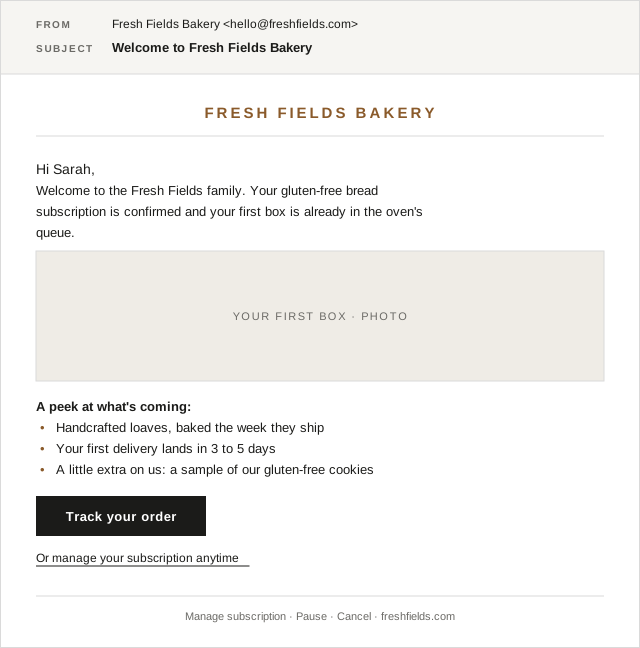
Mockups show Fresh Fields Bakery, the made-up brand from the template pack.
2. The subscription manual
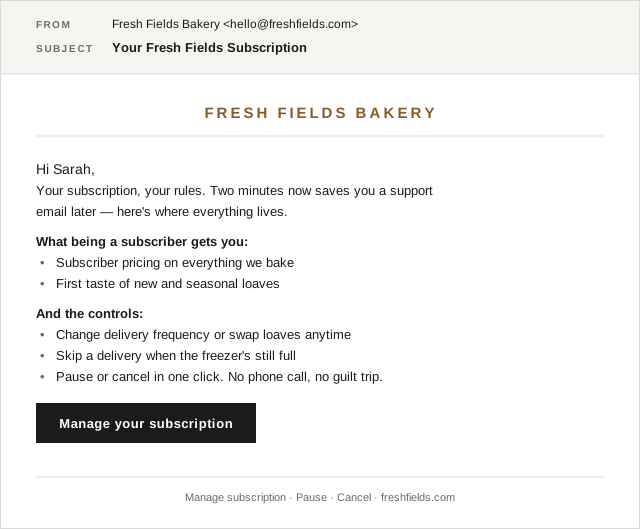
Send minutes later. Job: hand over the controls.
Where the account lives, how to change delivery frequency, how to swap products, how to pause, and yes, how to cancel. Showing the exits this early feels backwards and works anyway, in every account we've run it: a subscriber who knows they can leave in one click stops watching for the trap, and a subscriber who knows how to skip a month uses skip instead of cancel when the pantry backs up. This is also the place to spell out what subscribers actually get: the discount, the flexibility, the first-access perks.
3. The product education email
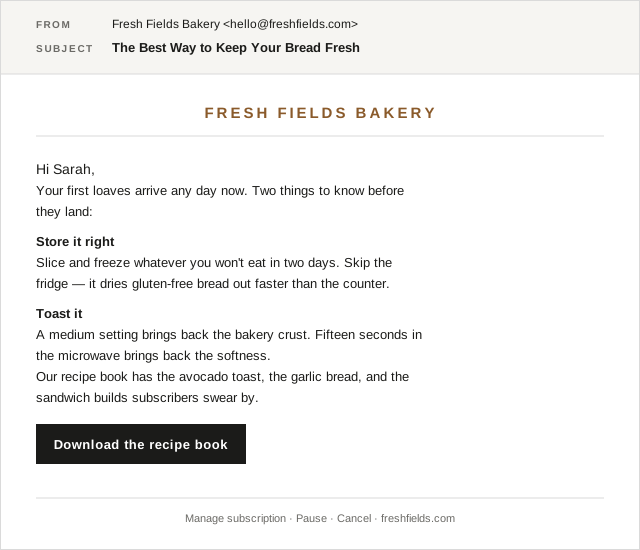
Send about a day later, or timed to delivery. Job: make sure the product gets used right.
The highest-value email in the sequence and the one we see skipped most. Storage, preparation, first-use mistakes, how long until it works, whatever stands between opening the box and getting the result they paid for. A subscriber using the product wrong is a cancellation with a delivery date on it. If your product is genuinely complex, make this two emails instead of one long one.
4. The founder story
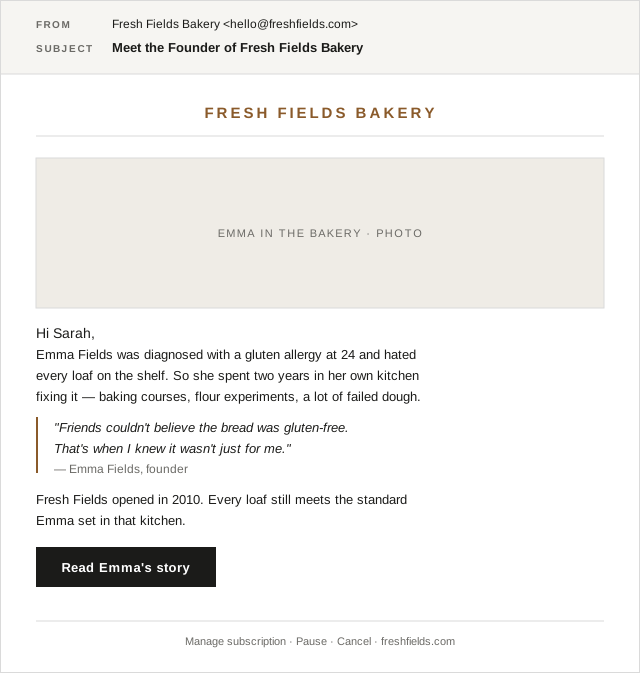
Send a day or two later. Job: give the subscription a person.
Nobody identifies with a SKU. They identify with the founder who was diagnosed with a gluten allergy, hated every loaf on the shelf, and spent two years fixing it. If your origin story is real, this email builds a loyalty no discount can: the reader stops paying a company and starts backing someone. If your honest origin is "we saw a market gap," skip this one and let the brand mission email carry the weight instead.
5. The adoption push
A day or two on. Job: build the routine.
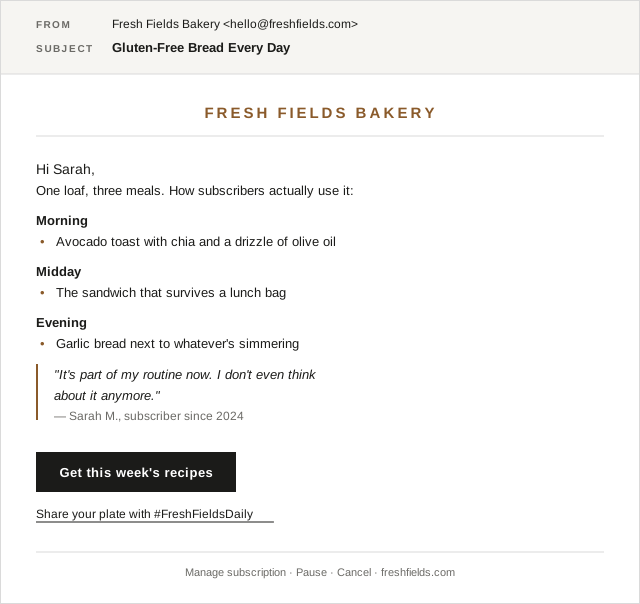
Affinity is nice; habit is retention. This email gives the product a slot in the subscriber's actual day: the breakfast it belongs to, the routine it anchors, the way other customers fold it into theirs. Usage ideas, a customer story or two, a nudge toward the community hashtag. The point isn't inspiration. It's repetition: a product used daily doesn't come up for review at renewal time. It's the plainest email in the set, and one we never cut.
6. The brand mission
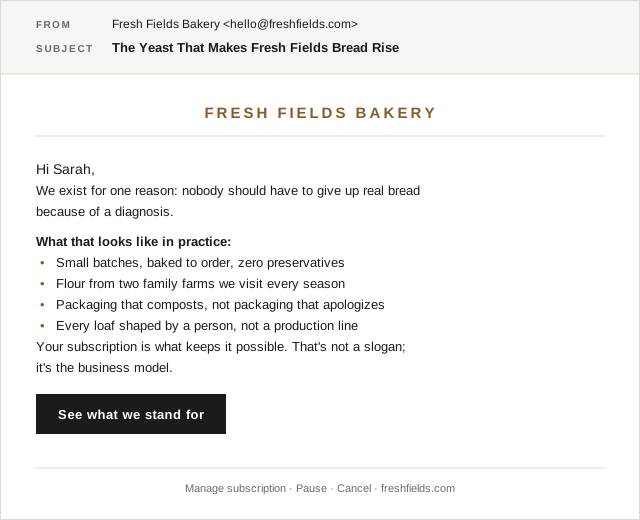
Send a day or two later. Job: tell them what their money is part of.
What the company is for beyond the product: the sourcing you insist on, the practices you refuse, the cause each order funds. iHeartDogs tells subscribers how many shelter dogs their orders help feed, and that number does retention work no product photo can. A subscriber who bought the mission has a reason to stay that survives one mediocre box.
7. The product deep dive
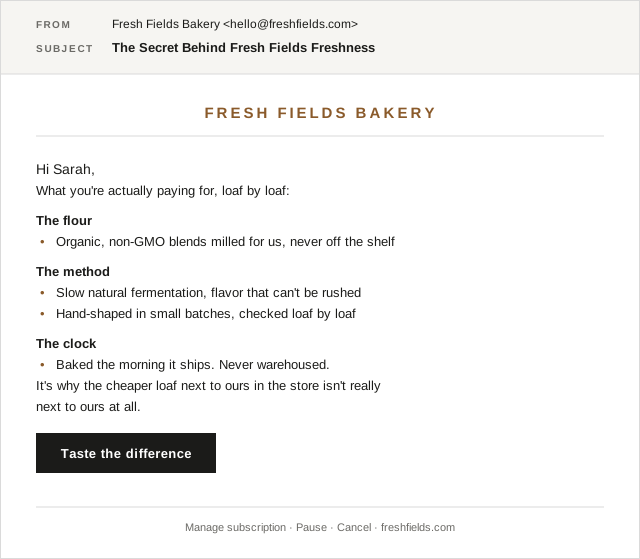
Another day or two out. Job: justify the price without discounting it.
What's actually different about the thing: the ingredients, where it's made, the process that costs more and why you pay it. This is quiet price defense. At some point the subscriber will look at the charge and ask whether the cheaper alternative is really different, or a friend will ask them why they pay for this. This email is where they learned the answer.
8. The perks recap
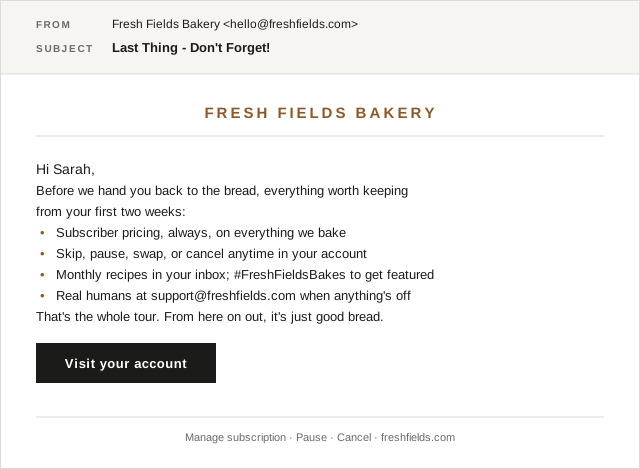
A day or two after that. Job: close the arc.
One last pass through everything worth remembering: the perks, the community, how to reach support, how to change anything about the subscription. Framed honestly ("last thing, don't forget") it reads as a courtesy instead of a sales touch. When it lands, onboarding is done and the subscriber re-enters your normal calendar knowing the product, the brand, and the controls.
Three ways brands blow it
- Treating the welcome email as the entire onboarding. One email is not a strategy. The verdict on a subscription forms over weeks, and a single day-zero message leaves the rest of that time silent.
- Spacing the sequence out to be polite. Motivation decays faster than your send calendar. An email every day or two while interest is high beats a weekly drip that arrives after the subscriber has stopped paying attention.
- Dodging the hard questions. If the product is slow to work, unusual to use, or different from what people expect, the sequence has to say so directly. Hoping subscribers figure it out is how confusion gets rebranded as buyer's remorse.
A subscriber who read even half of this sequence knows how to use the product, what the brand stands for, and where every control lives. That subscriber renews differently, because nothing about the subscription is a mystery anymore. Silence creates doubt. Communication creates confidence. The first two weeks are when you choose which one you're building. And once your sequence is drafted, run it past Ask The Cancel Page before it ships; it will tell you which email is doing two jobs and which job nobody is doing.
About the author
Subscription Prescription is the agency growing e-commerce brands bring in to fix and scale their subscription programs. Onboarding is almost always the first thing they rebuild, and everything above is how they run it on live accounts before breaking it down on their podcast and newsletter.